> For the complete documentation index, see [llms.txt](https://docs.superiormc.cn/llms.txt). Markdown versions of documentation pages are available by appending `.md` to page URLs; this page is available as [Markdown](https://docs.superiormc.cn/new-user-doc/fu-zhu-ye-yao-hui-yi-dian-zhe-xie/4.1-kai-yuan-cha-jian-de-gou-jian.md).
# 4.1 - 开源插件的构建
在前面很多地方我们已经介绍了 **GitHub** 网站,而插件作者把自己的插件开源但在 **SpigotMC** 等平台提供付费下载。对于只想研究该插件、没有充足资金的服主来说,学会自己构建它们也可以省下一笔支出,但需要注意的是,这么做以后作者是不会给你提供服务支持的,遇到问题、提交建议等一般都需要自己解决,除非作者声明了付费用户和自行构建用户不区别对待。
## IntelliJ IDEA 的下载与安装
点击 [此链接](https://www.jetbrains.com/idea/download/download-thanks.html?platform=windows\&code=IIC) 下载,安装与常规软件并无差异,在此不再赘述,实在不会的请自己查询。
## 从 GitHub 上克隆项目
打开软件后,点击“从VCS获取”,在打开的页面中输入 GitHub 的地址即可。

## 进入项目
进入项目后,IntelliJ IDEA 会自动开始构建项目,如果并没有,点击图片所示的图标即可。构建项目中的主要过程就是下载依赖。
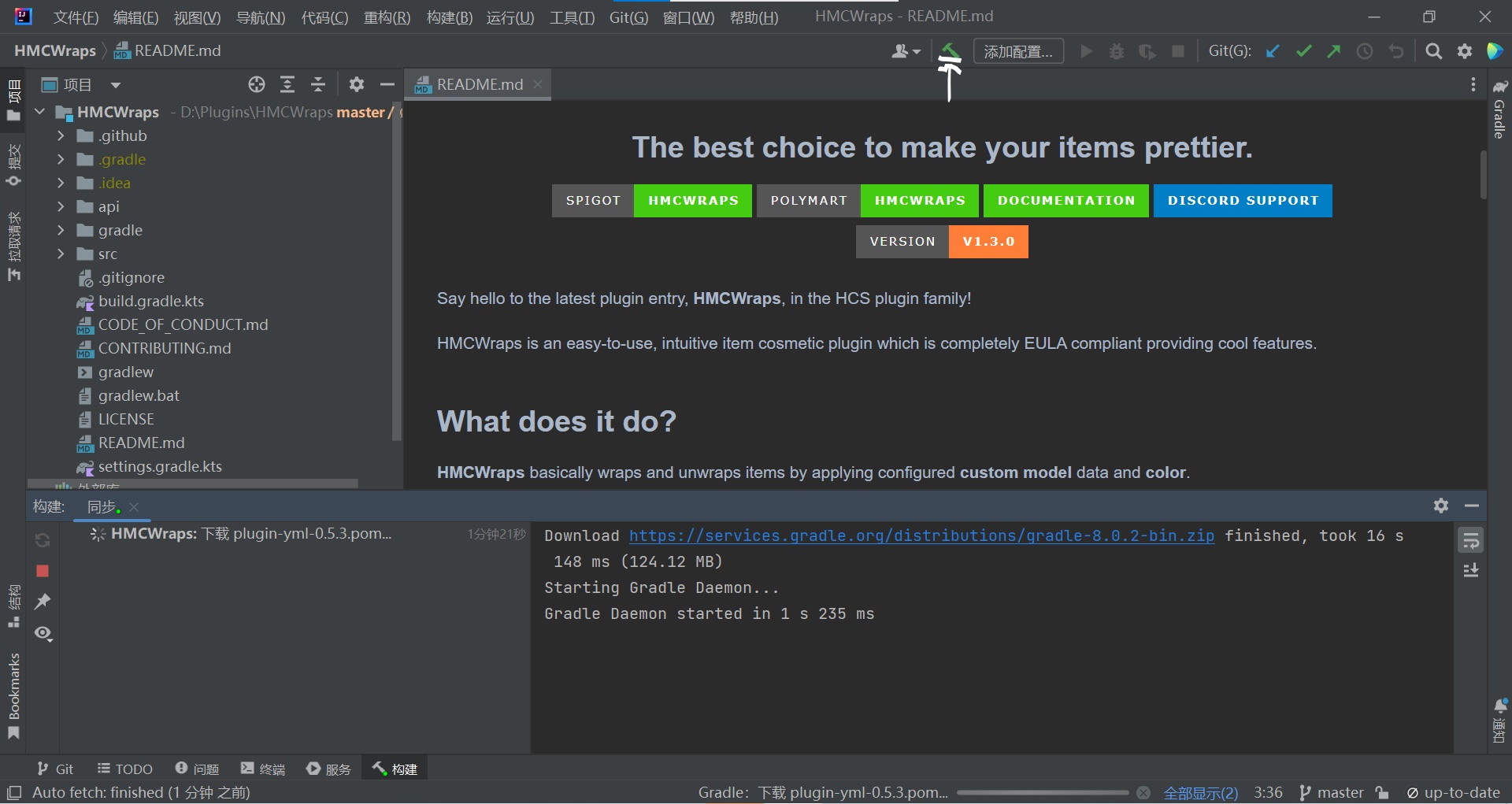 如果这个过程中出现下载依赖方面出现问题,可以着手以下两个方法:
* 使用镜像节点。
* 使用代理。以 Clash 为例,你需要在常规选项卡开启 TUN 模式。
## 打包 jar
一般开源项目会自带构建、打包插件成 **jar** 文件的 **gradle** 或者 **maven** 文件。使用 **maven** 作为构建、打包工具的项目源代码会含有 **pom.xml** 文件,而 **gradle** 则是很好就可以辨别出来。
知道插件使用的构建、打包工具后就可以开始着手打包了:
* 在上图所指图标右侧有一个 **添加配置** 按钮,请点击它。
* 在打开的新页面中点击 **添加新的运行配置** 按钮。
* 在再次打开的新界面中找到对应的构建、打包工具,例如这里是 **gradle**。
* 在再次打开的新页面中的运行字段框中输入打包指令。**gradle** 输入 **clean build**,**maven** 输入 **clean package**。
如果这个过程中出现下载依赖方面出现问题,可以着手以下两个方法:
* 使用镜像节点。
* 使用代理。以 Clash 为例,你需要在常规选项卡开启 TUN 模式。
## 打包 jar
一般开源项目会自带构建、打包插件成 **jar** 文件的 **gradle** 或者 **maven** 文件。使用 **maven** 作为构建、打包工具的项目源代码会含有 **pom.xml** 文件,而 **gradle** 则是很好就可以辨别出来。
知道插件使用的构建、打包工具后就可以开始着手打包了:
* 在上图所指图标右侧有一个 **添加配置** 按钮,请点击它。
* 在打开的新页面中点击 **添加新的运行配置** 按钮。
* 在再次打开的新界面中找到对应的构建、打包工具,例如这里是 **gradle**。
* 在再次打开的新页面中的运行字段框中输入打包指令。**gradle** 输入 **clean build**,**maven** 输入 **clean package**。
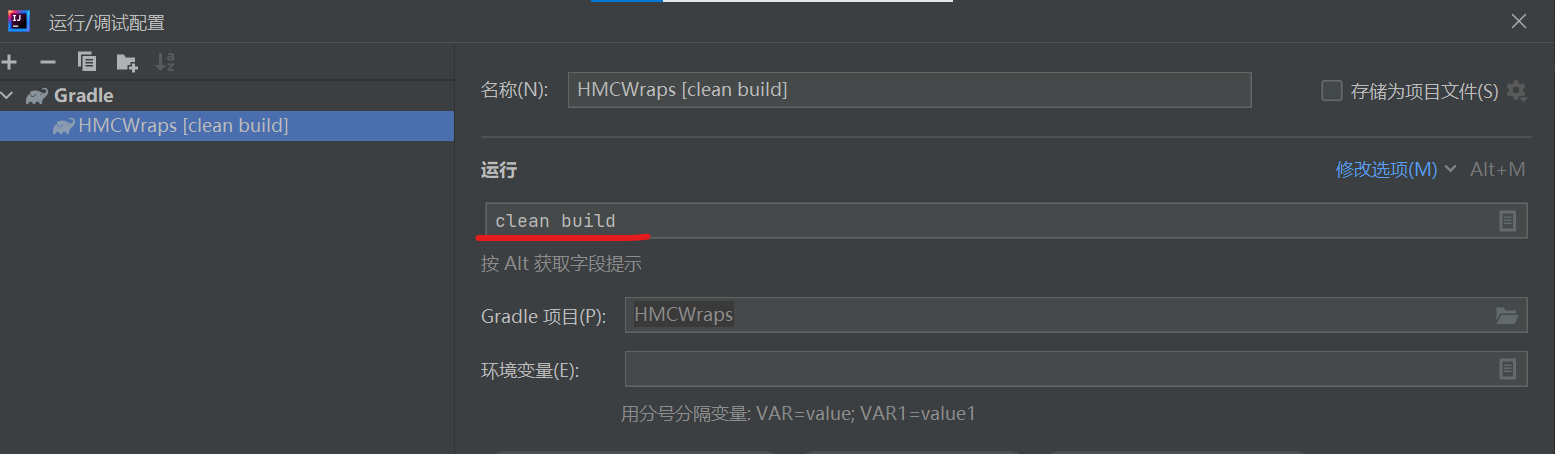 * 打包完成。
 ## 添加本地库
本地库可以在 **Maven** 或者 **Gradle** 的构建文件添加。
{% hint style="info" %}
**请注意,如果添加的 jar 文件下又需要添加其他 jar 文件作为依赖,那么添加本地库需要将这些所有用到的 jar 文件全部打包。**
**例如,在下面这个例子中使用了 GamePoints 插件作为依赖打包,而 GamePoints 又用了其前置插件 NexEngine 作为依赖,因而我将两个插件都写进了这个构建文件中。**
{% endhint %}
对于 **Maven**,打开项目下的 `pom.xml` 文件,找到如下格式的内容:
```
org.spigotmc
spigot-api
1.19.1-R0.1-SNAPSHOT
provided
su.nightexpress.gamepoints
GamePoints
1.3.5
system
${project.basedir}/lib/GamePoints-1.3.5.jar
su.nexmedia
NexEngine
2.2.8
system
${project.basedir}/lib/NexEngine.jar
```
然后将对应的 **jar** 文件放置到项目文件夹下的 **libs** 文件夹即可。
**Gradle** 就比较简单了,找到 `build.gradle`,在:
```
dependencies {
...(一系列内容)
}
```
中添加:
```
compileOnly fileTree(dir:'libs',includes:['*.jar'])
```
## 添加本地库
本地库可以在 **Maven** 或者 **Gradle** 的构建文件添加。
{% hint style="info" %}
**请注意,如果添加的 jar 文件下又需要添加其他 jar 文件作为依赖,那么添加本地库需要将这些所有用到的 jar 文件全部打包。**
**例如,在下面这个例子中使用了 GamePoints 插件作为依赖打包,而 GamePoints 又用了其前置插件 NexEngine 作为依赖,因而我将两个插件都写进了这个构建文件中。**
{% endhint %}
对于 **Maven**,打开项目下的 `pom.xml` 文件,找到如下格式的内容:
```
org.spigotmc
spigot-api
1.19.1-R0.1-SNAPSHOT
provided
su.nightexpress.gamepoints
GamePoints
1.3.5
system
${project.basedir}/lib/GamePoints-1.3.5.jar
su.nexmedia
NexEngine
2.2.8
system
${project.basedir}/lib/NexEngine.jar
```
然后将对应的 **jar** 文件放置到项目文件夹下的 **libs** 文件夹即可。
**Gradle** 就比较简单了,找到 `build.gradle`,在:
```
dependencies {
...(一系列内容)
}
```
中添加:
```
compileOnly fileTree(dir:'libs',includes:['*.jar'])
```